12. Archiving and Preservation
The Archiving and Preservation work package has worked to understand and provide practical guidance around the archiving and preservation of ebooks. Specifically, we have looked at the requirements for effective archiving of open access digital publications by small publishers, e-theses by university repositories, and the workflows for open access books to enter National Library archives.
The team has created:
- new Criteria for Open Archiving - reflecting the specific needs and opportunities of open access publications
- advice and guidlelines for small publishers in creating effective and practical open archiving strategies and solutions for their own publications
- a report and training resources for the archiving of e-Theses, and
- a study of the workflows and challenges for National Libraries in including open access e-books into their archiving systems.
- Copim Open Archiving Criteria
- eBook Archiving: A Toolkit for Small Publishers
- Introduction
- What is a ‘simple’ ebook?
- Developing an Archiving Strategy: Why archive?
- Developing an Archiving Strategy: What content to archive?
- Developing an Archiving Strategy: What formats to archive?
- Developing an Archiving Strategy: What metadata to archive?
- Developing an Archiving Strategy: Archiving outbound links?
- Developing an Archiving Strategy: Where to Archive content?
- A very simple open archiving strategy for a small publisher
- e-Thesis Archiving: A Report and Training Resources
- National Libraries: Digital Preservation Workflows for Open Access Books
- Archiving and Preservation Outputs from the COPIM/OBF projects
- Contact details
Copim Open Archiving Criteria
Copim Open Archiving Criteria for Open Access Publications
Eight criteria are identified for the effective archiving of open access publications. Although developed primarily for books, we believe the criteria are appropriate for open access publications generally.
This page reproduces the text of Cole, G., Gatti, R., Higman, R., Stokes, P., Steiner, T., & Turpin, H. (2026). Copim Open Archiving Criteria (1.0). Zenodo. https://doi.org/10.5281/zenodo.19882469
Introduction
Open access publications carry specific characteristics that make appropriate archiving solutions both more urgent and more complex. Published under open licences, such as Creative Commons Licences, they may be freely downloaded, redistributed, and in many cases adapted without restriction beyond basic attribution to the original work (itself highlighting the importance of access to the original work). They often contain embedded or interactive content hosted by third parties, active hyperlinks to external material essential to understanding the work, and are more readily updated or revised than print equivalents. All these features, while central to the openness and scholarly value of such publications, raise important challenges for monitoring version control and ensuring the integrity of content, and create vulnerabilities that a robust archiving framework must directly address.
At the heart of the criteria is a commitment to openness not just in access, but also in process. An archiving solution for open access content should itself be transparent: openly accessible to readers without DRM restrictions, built on openly licensed metadata, and governed by verifiable, publicly stated processes for preservation, version control, and content integrity. Checksums, permanent URLs, and redundant geographic distribution are not technical niceties — they are the foundations of trust that allow future readers, researchers, and institutions to be confident they are engaging with authentic, unaltered scholarship.
These criteria have been developed as part of the COPIM and Open Book Futures projects, which focused primarily on the needs and priorities of smaller, often scholar-led, open access book publishers — organisations that typically operate with few staff, limited in-house expertise in preservation and metadata, modest annual output and necessarily rely on third-party archiving solutions for their publications. (1) However we believe the criteria are quite general and are equally applicable to all open access scholarly publications - not just books - and to publishers of all sizes.
The intention is that these criteria can be used by publishers as a basis to assess their existing archiving processes and to design effective archiving solutions for open access content, and by funders and policy makers as a basis for identifying archiving requirements for open access content without necessarily identifying or mandating specific solutions.
The criteria recognise that open access archiving is a shared responsibility across multiple stakeholders — authors, publishers, repositories, and preservation organisations — and that no single solution will suffice. They are not intended as a barrier to participation, but as a common standard that raises the floor for archiving practice across the open access publishing ecosystem. They are designed to inform the development of shared solutions, guide the selection of existing services, and support the training and guidance that will help the whole community meet them. (2)
These eight criteria emerged from a workshop by the participants in the Open Book Futures Archiving work package (Higman et. al. 2025) and have been refined and validated through extensive community consultation with publishers, editors, solution providers, and digital preservation specialists via numerous discussions, conference presentations, workshops and an expert gathering convened by the Digital Preservation Coalition in October 2025. We are extremely grateful to all the participants who engaged in this process and for the feedback we received. The resulting framework distinguishes between what we believe an open archiving solution must provide and what it should provide, as set out in full below.
The Copim Open Archiving Criteria
The Copim Open Archiving Criteria
Must Haves
The following four conditions are considered essential requirements for any open archiving solution serving open access publications.
1. Openly Accessible Content
The original published content — in all its file formats — must be freely available to download by any reader with access to the internet, without DRM restrictions and under the same licence as the work itself. The archive must permit bulk downloads of content, enabling independent third-party preservation and ensuring that content can be rescued in the event of archive failure. A permanent URL must be available for each archived work, so that the location of the archived version can be recorded within the work's metadata and DOI record, creating a stable and citable point of access for future readers.
2. Openly Accessible Metadata
Book metadata must be archived under a CC-0 (or equivalent) licence and made freely available for all readers to download alongside the work itself. Open metadata is not merely a convenience — it is a prerequisite for discoverability, interoperability, and the long-term ability of the scholarly community to find, verify, and build upon published research. Proprietary or restricted metadata undermines the openness that open access publishing is intended to deliver.
3. Openly Verifiable Archiving and Preservation Processes
For both content and metadata, the processes by which material is archived and preserved must be transparent and independently verifiable. This requires the publication of checksums to allow readers and institutions to verify content integrity; transparent version control so that the history of a work can be traced and understood; clearly stated processes for verifying that archived content matches the published version of record; and transparent preservation processes — including the maintenance of original files — so that the integrity of the archive can be assessed over time.
4. Adherence to Accepted Good Practice in Digital Archiving Operations
An archiving solution must demonstrate that it operates in accordance with established good practice for digital archives, such as membership of the ISSN Keepers Registry or compliance with a CRL TRAC audit, ISO:16363 or the Core Trust Seal. This includes reliability and documented strategies for ensuring the long-term continuation of the archiving service, as well as the maintenance of multiple geographically redundant copies of all archived content. The long-term viability of the archive — not merely its current operation — must be a central consideration in the design and governance of any solution.
Should Haves
The following four conditions are strongly recommended, reflecting the particular needs and characteristics of open access content, and the broader responsibilities of any archiving solution operating in this space.
5. Support for Retrieving and Archiving Additional Content Associated with the Work
Open access publications frequently depend upon material beyond the core text — supplementary datasets, media files, and web-based resources linked within the work itself. An archiving solution should actively support the retrieval and preservation of such additional materials, including supplementary content provided by publishers and authors to accompany the main text, and web pages referenced via URLs within the publication. Archiving linked web content is a critical mechanism for mitigating link rot, which poses a particular threat to the integrity of digitally native scholarship. (3)
6. Clearly Stated Policies Around Removal of Content
Because open access content is freely and publicly available, archiving platforms are more likely than restricted repositories to receive requests — or demands — for content to be taken down. An archiving solution should have clearly stated, publicly available policies for handling such requests, including tomestoning policies and processes for distinguishing between legitimate legal obligations and requests motivated by a desire to suppress lawfully published content. The question of retractions also requires explicit policy: where a publisher retracts a work, there may be a continuing scholarly and historical interest in preserving access to the retracted version alongside appropriate contextual information.
7. Independence from Private or Government-Controlled Entities
To guard against censorship and the concentration of control over the scholarly record, an archiving solution should be structured so as to minimise dependence on any single private or government-controlled entity. This is best achieved through the distribution of content across diverse legal jurisdictions, the use of diverse technologies and hosting environments, and the adoption of networked solutions involving multiple providers rather than a single point of failure. Redundancy of entity — not merely of copies — is a distinct and important dimension of resilience for openly published content.
8. Collation and Provision of Usage Statistics
Since open access content can be freely downloaded from archiving platforms without passing through a publisher's own systems, authors and publishers may otherwise have no visibility of how their work is being accessed and used. An archiving solution should therefore collect and make available usage statistics — including download counts and access data — to inform authors and publishers about the reach and impact of archived works. This supports both the practical needs of publishers and authors and the broader goal of demonstrating the value of open access scholarship.
- An open archiving toolkit for small publishers is also available as part of this Copim Compass workbook: https://compass.copim.pub/books/12-archiving-and-preservation/chapter/ebook-archiving-a-toolkit-for-small-publishers
- A review of how several existing archiving solutions meet the various criteria - based on publically available information - is contained in an associated report: Steiner, T., Cole, G., Fry, J., Gatti, R., Higman, R., Stokes, P., & Turpin, H. (2026). Applying Open Access and Open Data to the Archiving of Long-Form Scholarship: A Comparative Analysis of Existing Services Through the Lens of the Copim Open Archiving Criteria (1.0). Zenodo. https://doi.org/10.5281/zenodo.19882343
- An associated report on link-rot and procedures for archiving related content has also been prepared as part of the Open Books Futures project: Stewart, G. (2026). Think, before you link: Link Rot, eBooks, and digital preservation. Zenodo. https://doi.org/10.5281/zenodo.19912435
eBook Archiving: A Toolkit for Small Publishers
Introduction
This toolkit is intended to provide an overview and guidance for the archiving and preservation of ‘simple’ open access ebooks, targeted primarily at small publishers. As will become clear, archiving and preservation should not be considered the role of the publisher alone - and considerations of archiving needs to be taken by all actors, starting with the author. We believe that the advice and recommendations contained in this toolkit, and the underlying research, is important for authors and all participants in scholarly research and communication - but we focus on the roles and actions publishers can take.
In the following sections we will consider what we mean by a 'simple' ebook, and considerations for publishers in developing an archiving strategy for a publication - noting that it may be that different ebooks need different strategies.
But the primary recommendations for publishers in creating an archiving strategy are:
- Identify the content that is important to archive. See the why archive and what to archive sections.
-
Archive standardised and widely adopted formats for all content (including metadata) - this will facilitate future format migration. See the what formats section.
-
Use multiple complementary archiving solutions - don’t rely on a single solution. See the where to archive section.
-
Adopt permanent identifiers and broadly adopted standardised terminologies within metadata and avoid bespoke terms and specifications. See the metadata section.
-
Describe the structure and nature of the content and links within the publication to allow layouts, fonts, descriptions of images and embedded content and links to be reconstructed if necessary. Applying accessibility standards to publications will help with this, and some file formats are better for this than others. See the Outgoing links section.
What is a ‘simple’ ebook?
Defining an ebook is not easy - and indeed an important part of the COPIM and OBF projects has been to push the boundaries of any such definition through the Experimental Publications work packages (see the Experimental Publishing pages within the Copim Compass).
For the sake of this toolkit we consider content that might reasonably be expected to be published and distributed as an ebook in PDF or EPUB format. Adapting slightly the ‘simple’ ebook structure developed by Gareth Stewart in his report on link rot (Stewart, G. (2026). Think, before you link: Link Rot, eBooks, and digital preservation. Zenodo. https://doi.org/10.5281/zenodo.19912435), we identify four main components of such a publication -
- the core text - primarily text and equations, including their layouts such as in tables and poems;
- embedded (non-textual) material - such as images, audio and video files;
- outbound links to external material - which may include additional resources or datasets associated with the publication, as well as citations or other third party content that may be important to the understanding of the work;
- the metadata associated with the work.
Figure 1 provides a representation of the main components of the type of ‘simple’ ebook publication we consider.
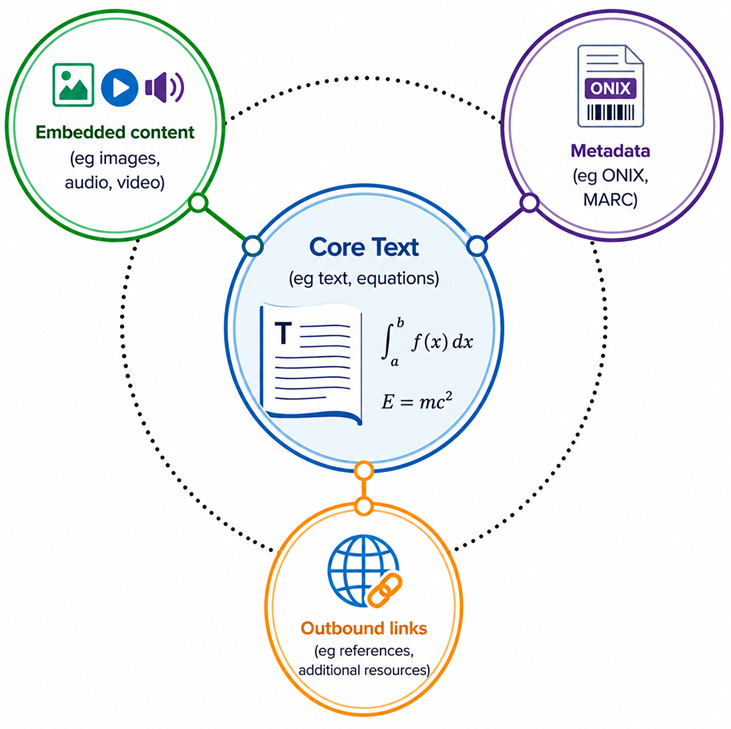
Figure 1: 'Simple' eBook - main components.
As Stewart notes: “The word ‘simple’ is used very loosely here(!), as evidently many layers of complexity could permeate in any of this model’s components. For example, metadata may be hosted externally in a separate system and linked to the eBook, embedded AV may be playable on an external web platform etc. There are many, many unusual combinations of doing things on the Web, which would be impossible to advise on in every instance.”
Furthermore, not all published formats of a single work will necessarily contain precisely the same content - the quantity and format of embedded material in the PDF and the EPUB editions of a work may vary, as may any embedded metadata.
It should also be noted that the content identified as important for archiving may differ from that included in any specific format used to publish the work. While it seems likely that the Core Text should be included in any archiving strategy, the other components may be considered more or less important for the understanding of the work and so be of greater or lesser importance for archiving purposes. Consequently, an effective archiving strategy is likely to differ from a strategy of archiving a single format of the published work.
Developing an Archiving Strategy: Why archive?
The first question for a publisher (or author) to address in developing an archiving strategy is: why archive the work at all?
One primary motivation is to enable a reader at some time in the future to be able to access the content of the publication.
What do we know about a future reader? If we consider a reader (say) 100 years from now, it seems reasonable to assume that:
- the reader will be using a completely new technology that is not compatible with any of the (now redundant) formats used in today’s publication
- that every single url/link to content outside the digital ebook is broken (linkrot).
And so that future reader will need:
- a mechanism to discover that the work exists at all, and
- a way to both access the content and understand the author’s work.
So we can state that a primary archiving and preservation objective for a publisher is:
To provide a future reader with ways to discover and engage with the publication, when the formats used in the publication are incompatible with the future reader’s technology and all external links within the publication are broken.
Solutions will necessarily require strategies to ensure:
- the discovery of the work’s existence - requiring the transition of book metadata over time,
- the discovery of the publication files themselves - requiring the transition of the book files over time
- access to file content by the new technologies - requiring format migration, and
- the reconstruction of both the links to external content and access to (the archived version of) that content.
Of course one strategy is to do nothing now and assume that the future managers of the publisher will take full responsibility for all these actions when the time comes. But most small publishers recognise that neither the existence or the financial health of future managers is guaranteed! Consequently, any successful preservation strategy will need to rely on future (potentially unknown) third parties undertaking some of this work for them. The important question for a small publisher then becomes:
What can I do today to make the job of reconstructing this publication for future readers by unknown third-party agents as easy as possible?
In the next sections we look at some of the main issues to consider for a publisher in developing such a strategy.
Developing an Archiving Strategy: What content to archive?
It seems unlikely that it is either necessary or feasible to archive every aspect of a publication. The first step is to consider how important the various components of the publication are to the understanding of the work by a future reader, and prioritise the most important components. We recommend four prioritised categories.
Category 1. Original content created for and core to the publication that is not being archived elsewhere.
This is most likely to include the core text written by the author as well as content such as images, audio/visual and other content which are embedded or linked to within the work. It may also include specific layouts for the content, such as in poetry or texts with line referencing. Metadata for the publication should also be included in this category.
This is the content that it will be most important to develop archiving solutions for.
Category 2. Non-original core content (such as third party images) that is very important to the understanding of the work, are embedded or linked to within the work, but for which there is no alternative archiving solution available. This, by definition, is not original content created for this publication - but readers will need access to this content to understand the author's work and original contribution, so addressing ways to ensure this content is archived and remains accessible to future readers will clearly be very important.
Category 3. Content important for the understanding of the work, but for which it seems reasonable to assume that archiving solutions are already in place? This might include third party content embedded in the work, important citations or original datasets related to the work but being archived elsewhere. In this case providing permanent links to the archived versions of the content or sufficient information for the archived work to be discovered by a future reader will be the priority, rather than necessarily archiving the content directly.
Category 4. Nice to have, but inessential content. Content that is deemed less essential for future readers to access can be considered as the lowest priorty for archiving. Providing permanent links to archived versions of this content (if available) is clearly still desirable, as is directly archiving that content if it is feasible to do so - but this category of content does not need to drive the archiving strategy.
Developing an Archiving Strategy: What formats to archive?
Archiving something is clearly better than not archiving at all, so a starting point is to archive what you have!
But given the opportunity to develop or select between alternatives, the project team developed "Good, better, best" guidance around alternative publication formats for archiving purposes, which is summarised below.
Barnes, M., Cole, G., Fry, J., Gatti, R., & Higman, R. (2023). 'Good, Better, Best': Practices in Archiving & Preserving Open Access Monographs (1.0). Zenodo. https://doi.org/10.5281/zenodo.7876048 .
There are a number of useful and more detailed reports on file formats and their suitability for archiving available, including:
DPC Digital Preservation Handbook: File formats and standards
Library of Congress Recommended Formats Statement 2022-2023
The primary issues to consider in assessing the suitability of a specific format for archiving are:
- adoption: the extent to which use of a format is widespread
- technological dependencies: whether a format depends on other technologies
- disclosure: whether file format specifications are in the public domain
- metadata support: whether metadata is provided with the format
Existing formats that can satisfy all these criteria well are PDF, EPUB, HTML and XML - although precisely how the publication is structured within these standards matters. Formats that are proprietary or niche are unlikely to be good candidates for long-term preservation.
Overall summary
-
PDF = stable, fixed, access-friendly but not so good for embedded content
-
EPUB = flexible, containerised, good if self-contained
-
HTML = web-native, archivable at scale but context-dependent
-
XML = best for long-term preservation and reuse (if well formatted), but not for direct reading
Together, these formats serve complementary roles, with XML/EPUB supporting preservation and reuse, and PDF/HTML supporting access and dissemination. It should also be noted that it is possible to include multiple formats together in a single folder as part of the archiving process - and many of the archiving platforms allow for this.
PDF
The most commonly used format presently used for both the publication and preservation of eBooks. PDF is now an open standard, and the broad adoption of the format and the sheer number of pdf documents in existence means that accessibility of future systems to pdf content seems very likely.
The primary characteristic of PDF is that it displays content formatted as if on a printed page - thus it is particularly valuable where that format is intrinsically important to the work itself (such as in poems, or when lines are referenced).
Ideally the PDF should be well formatted and structured with searchable text, embedded fonts, content tagging, alt-text and good metadata - as generated, for example, for compliance with accessibility standards and embodied in the PDF/UA specification.
PDF offers options for embedding multi-media content - but the difficulty is that preservation software will not pick up the existence of that media.
The PDF/A standard was created specifically for archiving and preservation - however this restricts external dependencies, and so is not ideal when these are important for the publication.
However badly formatted PDFs, lacking any of the above features, can also be generated. While they may display well enough today they will be less appropriate of successful for archiving purposes. The good news is that work undertaken to enhance accessibility of the publication will be valuable for archiving and preservation purposes as well.
EPUB
The EPUB format consists of XHTML files that carry the content, packaged in an archive file along with any additional images and supporting files. The container file (based on the ZIP format) is able to include separate files for embedded content - which facilitates the migration of the content over time.
The difficulties with EPUB are that they don’t maintain the formatting information in the same way as PDFs do - if that is important for the publication. Utilising the full features of the EPUB for archiving purposes can also generate a very large file size, not suitable for easy transmission as an ebook - so some publishers generate separate EPUBs for distribution and archiving purposes.
XML
XML is not technically a file format, but a language that can be used to define any number of specific formats, which are defined by an accompanying XML Schema Definition (XSD) and Document Type Definition (DTD). EPUB3 is one such XML format. Following a well defined standard (such as EPUB3 or TEI) is necessary for successful long-term preservation and later rendering. As with PDF, if XML files are created in nonstandard ways, this can jeopardise future usability and prevent proper rendering.
HTML
HTML, and XHTML, is a text-based markup languages widely used in websites and for the online rendition of publications. When combined with DOCTYPE declaration and presentation stylesheet(s) these can function well for preservation purposes.
Developing an Archiving Strategy: What metadata to archive?
Metadata is critical for the discovery and effective dissemination of books. Just putting something online doesn't mean anybody will get to know about it - and this is particularly true for future readers searching and accessing works in ways we have not yet imagined. While more metadata is always to be encouraged, it is important to use persistent identifiers and controlled vocabularies whenever possible as this will increase the likelihood of interoperability and the successful transmission of metadata to new systems in the future.
What metadata to archive?
The report International Metadata Recommendations, and Platform-Specific Requirements for Open Access Books and Chapters (Steiner et al. 2026) identifies metadata fields that are "Essential", and those that are "Desirable", for the effective dissemination of open access books. These criteria are appropriate for archiving purposes also.
Essential bibliographic and access metadata include:
- title and subtitle (multilingual if appropriate)
- contributors (including standardised and persistent identifiers such as ORCID or ISNI where possible)
- copyright holder and licence,
- subjects (utilising recognised schemas such as THEMA where possible)
- landing page and full-text URLs and/or DOIs at book and chapter level (ideally, for archiving purposes, a link/reference to an archived version should be included)
- publisher details, and publication date.
Desirable elements include:
- abstract (multilingual if appropriate)
- cover image
- table of contents
- contributor affiliations (using standardised and persistent identifiers such as ROR where possible)
- funder details (using standardised and persistent identifiers such as ROR where possible)
What formats to archive metadata?
Many file formats, such as PDF and EPUB, allow extended metadata to be included in the book file itself - and clearly the more metadata included this way the better.
However, we recommend that when archiving content a separate metadata file be included alongside the primary ebook file(s) in an open and standardised format that can be accessed as plain text if necessary (such as ONIX, MARC or JSON). This helps ensures that the metadata can be openly shared across systems and platforms and that engagement with specific software or formats is not required to access the metadata
This section summarises the findings of several reports created within the OBF project:
Barnes, M., Cole, G., Fry, J., Gatti, R., & Higman, R. (2023). 'Good, Better, Best': Practices in Archiving & Preserving Open Access Monographs (1.0). Zenodo. https://doi.org/10.5281/zenodo.7876048 . This report considers the archiving of metadata specifically in Chapter 2.
Steiner, T., Arias, J., Bennett, M., Booth, E., Edmunds, J., Gatti, R., Higman, R., Hillen, H., Laakso, M., Nason, M., O'Connell, B., Pogačnik, A., Rabar, U., Ramalho, A., Stone, G., van Gerven Oei, V. W. J., & Wake Hyde, Z. (2026). International Metadata Recommendations, and Platform-Specific Requirements for Open Access Books and Chapters (1.0). Thoth Open Metadata. https://doi.org/10.5281/zenodo.18173982. This report identifies the most important metadata fields to provide to ensure broad discovery and dissemination of the work.
Stone, Graham, Rupert Gatti, Vincent W. J. van Gerven Oei, Javier Arias, Tobias Steiner, and Eelco Ferwerda.
‘WP5 Scoping Report: Building an Open Dissemination System’. Community-Led Open Publication Infrastructures
for Monographs (COPIM), 21 April 2021. https://doi.org/10.21428/785a6451.939caeab.
Developing an Archiving Strategy: Archiving outbound links?
As part of the OBF project the Garth Stewart at the Digital Preservation Coalition undertook a report looking specifically at issues around the archiving and preservation of outgoing links and the content associated with those links.
Stewart, G. (2026). Think, before you link: Link Rot, eBooks, and digital preservation. Zenodo. https://doi.org/10.5281/zenodo.19912435
The report provides helpful information for both publishers and authors to help them realistically mitage against the reprecussions of link rot for their publications. Key recommendations for authors and publishers, as laid out in Steps 1 to 5 of Part B of the Report, are:
1. Think before you link, and determine acceptable loss
Link rot is inevitable, so authors and publishers must be selective about which links they include. Not all links are equally valuable—some are critical to understanding the work, while others are supplementary.
Stakeholders should assess whether a link “must survive” and define an acceptable level of loss. This involves prioritising essential content, avoiding unnecessary links, and considering the longevity and reliability of the source. Authors should also evaluate how broken links would affect user experience, trust, and the integrity of the work.
Where possible, critical external content should be embedded or packaged with the eBook. Ultimately, this step promotes a risk-based, intentional approach to linking, recognising that some loss is normal and manageable if planned for.
2. Cite to resilient links
Focuses on improving the durability of links that are included. Authors should use simple, stable, and transparent URLs, avoiding long, complex, or shortened links that are prone to failure. Preference should be given to trusted sources, landing pages rather than deep file paths, archived and open-access content.
Persistent identifiers (e.g. DOIs) are encouraged where available, though these should not be assumed to be permanent.
Citing archived versions of webpages (e.g. from web archives) is best practice for critical content, as these are more stable and preserve content in a fixed state. Clear and consistent citation also acts as “preservation metadata,” helping future users locate content even if links break.
3. Describe more, bolster accessibility
To mitigate the impact of link rot, authors should provide detailed descriptions of linked content, including its context, purpose, and structure. This can include summaries, transcripts, or screenshots, especially for multimedia resources. Even brief descriptions can preserve meaning if the link fails. This approach not only strengthens long-term resilience but also improves accessibility for users and machines. Documentation can be embedded in the text or stored as metadata.
While this requires additional effort, it is far less costly than attempting to recover lost content later.
Overall, richer description ensures that the intellectual value of the work remains understandable even when links disappear.
4. Archive your URLs
For important or critical links, stakeholders should proactively create archived copies using web archiving tools or services.
These snapshots (e.g. via services like “Save Page Now” or similar tools) provide stable, time-stamped versions of content that can be cited or stored alongside the eBook. Where possible, multiple copies or formats (e.g. WACZ/WARC files) should be created to increase redundancy. These files could also be archived alongside the content and metadata files in the folder used for archiving the publication itself.
These archived versions can either replace or supplement live links, reducing dependence on the original source. Although this step requires more effort and resources, it significantly increases long-term access and protects against both link rot and content drift.
5. Monitor your URLs, enact digital archaeology
After publication, links should be periodically checked to identify breakage. Publishers and repositories can use automated tools to monitor link health, particularly for online eBooks. For open access works it is also not unusual for readers to report broken links when these are observed. When links fail, “digital archaeology” involves searching web archives or other sources to recover or replace missing content. While not all links can be restored, this process can often recover valuable material. This step acknowledges that preservation is ongoing, not one-time, and requires maintenance over time. It is especially important for high-value links, helping sustain the usability, credibility, and completeness of the eBook as it ages.
Developing an Archiving Strategy: Where to Archive content?
As part of the work undertaken within the OBF project we have identified many alternative archiving solutions and, in light of our recommendations for Open Archiving Criteria, conducted an analysis of some of the main alternatives. For five specific archives (CLOCKSS, Portico, Internet Archive, Zenodo and Figshare) we directly assessed their technical specifications and operations against the eight Open Archiving Criteria.
The table below, taken directly from that report, provides an overview of this work.
Overall, the main findings are:
- no single solution individually satisfied all eight open access archiving criteria identified;
- combinations of two or three different solutions collectively did. Strategically combining solutions and harnessing their different characteristics and structures is more effective than relying on a single solution;
- robust open archiving solutions that are both free and relatively easy to implement exist, and are available to even the smallest publishers.
Specifically, we found that combining two freely accessible open generalist repositories, the Internet Archive and Zenodo, will provide small publishers with a free-to-use and effective open archiving solution for thier publications and associated content, that is also built on open and non-profit infrastructures well aligned with the general COPIM principles.
We encourage publishers, when formulating their archiving strategy, to use the framework developed in the report and table below to assess the archiving alternatives available to them and how they can be combined effectively to create an open archiving solution that meets their own needs. For example, Thoth Open Metadata (itself an output of the COPIM/OBF projects) - as well as providing a free mechanism for publishers to create and output enhanced metadata in file formats conducive for archiving - has created an automated Open Archiving Network for publishers by uploading book content and metadata files to the Internet Archive, Zenodo and their own CDN.
Greater details of the analysis conducted can be found in the full report:
Steiner, T., Cole, G., Fry, J., Gatti, R., Higman, R., Stokes, P., & Turpin, H. (2026). Applying Open Access and Open Data to the Archiving of Long-Form Scholarship: A Comparative Analysis of Existing Services Through the Lens of the Copim Open Archiving Criteria (1.0). Zenodo. https://doi.org/10.5281/zenodo.19882343
Table: Comparison of five archiving solutions with the Open Archiving Criteria.
| Open Archiving Criterion | CLOCKSS | Portico | Internet Archive | Zenodo | Figshare |
| 1) Openly accessible content (directly upon deposit) | No. CLOCKSS is a "dark archive" - content is generally not accessible to users unless a "trigger event" occurs, after which it is released under an Open Access license (Creative Commons or equivalent, selected by the publisher or the CLOCKSS Board). It seems noteworthy that CLOCKSS' "Triggered Content" section of released scholarly output currently only lists serials/journals - which seems to imply that no books have ever been released through a trigger event. | No. Portico is a "dark archive" that provides access to content only after a "trigger event". In case a trigger event is envoked, content is either released only to participating libraries, or made available open access (if the depositing publisher has indicated that to be their choice). | Yes. The core mission of the Internet Archive is "Universal Access to All Knowledge", and it accordingly provides free and immediate access to the vast majority of its collections. | Yes. Zenodo's core mission is to serve as an Open Science repository. While it allows for embargoed or restricted content, its goal is to make content public, with embargoes expiring automatically. | Yes. Figshare is an open-access repository that adheres to the principle of open data, with all publicly published content downloadable by anyone. |
| 2) Openly accessible metadata | Partially. CLOCKSS publishes basic aggregate holdings metadata (e.g. titles, ISSNs) via open CSV/KBART lists, so the public can see what titles are being preserved. Extended content- and archiving-related metadata including relational descriptions (e.g. chapter-/book-level relations) is stored internally as part of the underlying LOCKSS software implementation, but these metadata sets are not available to the public. | Partially. Portico makes basic bibliographic holdings metadata openly available in several formats. Custom holdings comparisons are available to libraries on request so they can compare the coverage of their journal or book holdings to what is preserved in Portico. Portico generates custom reports for some community partners such as CHORUS. | Yes. Metadata for items and collections is usually stored in openly-available XML following Dublin Core, and can be output in formats like JSON, XML, or CSV. | Yes. Metadata is licensed under a CC0 dedication, exported via OAI-PMH, and can be harvested by third parties without restriction. | Yes. All metadata published on the Figshare platform is available under a CC0 dedication. |
| 3) Openly verifiable processes: a) Publishing checksums to allow verification of content integrity | No, not publicly. According to CLOCKSS' documentation, the CLOCKSS system uses a "polling-and-repair mechanism" across its 12 nodes to continuously validate data integrity, but it does not publish checksums for public verification. | No. Portico maintains an internally-verifiable audit trail (not accessible to the public) and performs self-checks and third-party certifications, but it does not publish checksums for public verification. | Yes. Various checksums are recorded as part of each deposit's *_files.xml data file, which are made publicly available together with the user uploads. | Yes. Zenodo stores two MD5 checksums for every file (one stored in Invenio, one in EOS) and regularly checks files against these checksums to ensure consistency of archived content. | Yes. Figshare performs and displays MD5 integrity checks when files are uploaded to the platform, and its hosting provider (AWS) also performs regular data integrity checks. |
| 3) Openly verifiable processes: b) Transparent version control (for both content and metadata) | No. CLOCKSS tracks and records all changes, including version updates and errata. New versions can be added to the archive, but content is never deleted. | No. According to Portico's documentation, an audit trail is maintained, keeping the original file and all related information if a transformation occurs. This information appears not to be available to the public, but can be accessed by the depositing publisher as well as designated auditors from the Portico network's participating libraries. | Yes. For user-uploaded items, a history of changes can be viewed by changing the URL from 'details' to 'history'. New versions of files can be uploaded and will be updated. | Yes. Zenodo supports file versioning. Records are not versioned, but changes to files will create a new version of a given deposit, together with a new DOI, to ensure the original version remains unchanged for citation purposes. | Yes. Figshare supports version control for both files and metadata, with previous versions displayed and accessible on each item's landing page. |
| 3) Openly verifiable processes: c) Clear mechanisms for checking and maintaining the content | Partially. CLOCKSS claims to have a unique "polling-and-repair mechanism" by which its 12 peer systems continuously validate the integrity of their shared data - but this can not be checked by the public | Partially. Portico claims to conduct regular fixity and integrity self-checks and undergoes independent third-party audits and certifications to guarantee quality and security. These mechanisms are not publicly accessible, though. | Partially. The Internet Archive duplicates/backs up all files at various locations. Its internal storage system, Petabox, is also mentioned. It does not seem to be openly verifiable, though. States that verification checks are undertaken periodically - but not clear how often of when. | Yes. Files are regularly checked against their MD5 checksums to ensure content constancy, and backups are performed nightly. Zenodo also performs file format checks. | Partially. Figshare relies on its hosting provider, AWS S3, which performs regular data integrity checks. Nightly backups of data files and metadata are also performed. |
| 4) Adherence to Accepted Good Practice in Digital Archiving Operations: a) Satisfies industry standards, e.g. CRL TRAC audit, ISO:16363, the Core Trust Seal, or the DPC’s Rapid Assessment Model (RAM)), which signal a commitment to and expertise in long-term preservation |
Yes. Satisfies criteria for membership of Keepers Registry. CRL TRAC-audited (2018). Certified CoreTrustSeal repository. | Yes. Satisfies criteria for membership of Keepers Registry. CRL TRAC-audited (2010). Alignment with OAIS (ISO 14721) | Yes. Satisfies criteria for membership of Keepers Registry. Not formally certified against ISO 16363, TRAC, or CoreTrustSeal, but its operational model reflects many of the core principles of trusted digital repositories. | Yes. Certified CoreTrustSeal repository. Aligned with OAIS (ISO 14721). Meets core expectations for fixity, authenticity, and traceability in archival standards. | Partially. Compliance with OSTP and NIH “Desirable Characteristics for Data Repositories”. While Figshare's hosting provider, Amazon Web Services, itself is not certified against ISO 16363, TRAC, or CoreTrustSeal, it delivers the core technical controls required for bit-level preservation and secure archival storage. |
| 4) Adherence to Accepted Good Practice in Digital Archiving Operations: b) Institutional reliability and long-term sustainability |
Yes. It is a financially secure 501(c)(3) non-profit with a diversified funding stream from hundreds of publishers and libraries. | Yes. Portico, a non-profit service of ITHAKA, has a diversified funding stream from ca. 1,300 libraries and 1,300 publishers, with financial contributions roughly split 50:50 between both stakeholder groups. It also conducts annual financial audits. | Partial. As a 501(c)(3) non-profit, its sustainability is tied to individual donations and grants from foundations, and it has an intention to store materials in perpetuity. Facing significant legal challenges which may be problematic for long-term sustainability. | Yes. Zenodo's long-term viability is tied to its host institution, CERN, which has a projected experimental program for at least the next 20 years. | Yes. Figshare is a for-profit company that provides a 10-year service-level agreement (SLA) guaranteeing persistent availability. |
| 4) Adherence to Accepted Good Practice in Digital Archiving Operations: c) Succession plannning |
Yes. CLOCKSS has a dedicated Trustee Committe that defined a Succession Plan. This includes the formation of a 4-library network that would continue to preserve the existing CLOCKSS content by running four LOCKSS nodes; the four libraries are Stanford University (USA)., University of Alberta (Canada), University of Edinburgh (UK), and Humboldt University, Berlin (GER). | Partial. Portico has a dedicate Succession policy, in which it outlines that the organisation will endeavor to find a successor non-profit organization, should it ever cease to operate. No actual organisation appears to have been identified. |
Partial. The Internet Archive has two independent branches in Canada and Europe that also mirror the main IA repository content. In case the US-based institution should cease to exist, any of the other two branches may carry forward the IA's operations. No specific information on institutional succession planning could be found from the documentation. The Internet Archive's approach might thus be described as implicit and infrastructural, not procedural. | Partial. Zenodo's policies state that in case of closure of the repository, best efforts will be made to integrate all content into suitable alternative institutional and/or subject based repositories. | Unclear. Bound by its host company Digital Science, a subsidiary of Holtzbrinck Publishing Group. |
| 4) Adherence to Accepted Good Practice in Digital Archiving Operations: d) Multiple geographically-redundant copies |
Yes. CLOCKSS operates 12-node LOCKSS repository network at academic institutions worldwide, spread across 4 continents. 2 Australian National University (Australia), Humboldt University-Berlin (Germany), Indiana University (USA, Indiana), National Institute of Informatics (Japan), OCLC Online Computer Library Center (USA,Ohio), Rice University (USA, Texas), Stanford University x 2 (USA, California), Università Cattolica del Sacro Cuore (Italy), University of Alberta (Canada), University of Edinburgh – EDINA (UK), University of Virginia (USA, Virginia) - Total of four continents |
Yes. A master copy containing all archival packages is kept in Princeton, NJ (USA) and is maintained using an Oracle database. All archival packages are replicated to a file system in the Texas Advanced Computing Center (TACC) as part of a partnership with Texas Digital Library (TDL). Publication content has a second online replica housed on a dedicated server in the National Library of the Netherlands. Non-publication content (e.g. D-Collections, Preserved Collections) has a second online replica located in an Amazon Web Services (AWS) Glacier repository. A separate complete copy of the original supplied files (pre-processing) are also archived in AWS Glacier. |
Yes. The Internet Archive has six primary data centers in three countries, including a full, second live copy in a Canadian data center as a backup outside the US, incl in the EU. It stores at least two copies of everything. | Yes. All data is stored in CERN Data Centres, with separate replicas stored in Geneva and Budapest. | Yes. Figshare is hosted on Amazon Web Services (AWS) S3, which is designed to sustain the concurrent loss of data in two facilities and offers cross-region replication. |
| 5) Support for retrieving and archiving associated content: a) “Additional materials” provided to supplement the main content |
Yes. CLOCKSS preserves "supplementary materials," including datasets, multimedia, and additional documentation. | Yes. Portico preserves e-journals, e-books, and "D-Collections" (digitized historical collections), as well as audio and video content. Any file format is accepted as supplement. | Yes. IA archives a vast range of content types beyond scholarly papers, including music, TV news, software, and images. | Yes. Zenodo accepts a wide variety of research artifacts, including text, spreadsheets, audio, video, and images. | Yes. Figshare is built to host "non-traditional research outputs" such as figures, datasets, media, papers, and code. It also hosts supplementary material for publishers. |
| 5) Support for retrieving and archiving associated content: b) Web pages represented by URLs within the main content |
No/Unclear. While CLOCKSS uses web harvesters / crawlers to programmatically discover and collect content from websites based on static URIs, it is not clear from the documentation if retrieval and subsequent archiving of associated content would be processed. | No. Portico's documentation does not explicitly mention a policy or process for archiving associated content. | Yes. The Internet Archive's Wayback Machine is specifically designed to archive web pages and their associated data such as Outlinks. Its Archive-It program allows for targeted web archiving. | No. Zenodo's documentation does not explicitly mention a policy or process for archiving associated content. | No. Figshare's documentation does not explicitly mention a policy or process for archiving associated content. |
| 6) Clearly-stated policies around removal of content | Yes. Content is not deleted from the archive. Corrected or retracted versions can be added to it, maintaining a permanent record. | Yes. Removal Content is held in perpetuity and released only in the event of a "trigger event," not removed. Portico has a clearly-described Content Modification and Deletion policy detailing removal processes. | Yes. Content can be removed, e.g. if copyright infringement has been claimed, or removal is requested by a website owner. | Yes. Content may be removed for reasons including spam, copyright infringement, scientific misconduct, and transfer to another repository. | Yes. Figshare maintains the right to remove data that violates its Terms of Acceptable Use. |
| 7) Collation of usage statistics | Partially. A dark archive, only 'triggered' content is accessible. The privacy policy mentions collecting "Aggregated Data" and "Usage Data" from its website once triggered, but there is no public-facing mechanism for tracking or reporting content-level usage statistics. | No. As a dark archive, Portico has reported very low usage overall. Usage statistics reports can be generated manually upon request for participating libraries. | Yes. The Internet Archive tracks and shares "views" and "downloads" for items and collections through a public API. No mentions of COUNTER or Make Data Count standards | Yes. Zenodo tracks and shares usage statistics, including visits and downloads, via a public API and is compliant with COUNTER and Make Data Count standards. | Yes. Figshare tracks and displays views, downloads, citations, and Altmetrics for hosted materials. It is compliant with Make Data Count and COUNTER standards. |
| 8) Independence from private or government-controlled entities: a) Governance |
Yes. CLOCKSS is a non-profit 501(c)(3) organisation. It is governed by a board with equal representation from libraries and publishers and answers to its community. The CLOCKSS Board of Directors comprises representatives from large commercial publishers incl. Elsevier, Wiley, and Wolters Kluver, as well as aggregators such as OCLC - all of who may have an influence on the organisation's overall direction. | Partially. Portico is a service of the non-profit organization ITHAKA. It operates through a community model with guidance from the participating library and publishing communities. It has its own dedicated Advisory Committee, but is also overseen by ITHAKA's Board of Trustees. Ultimately, Portico's decision-making may thus also be influenced by ITHAKA's strategic objectives. | Yes. The Internet Archive is a 501(c)(3) non-profit, not controlled by a private or government entity. Its management board comprises librarians and open archiving advocates. | Partially. Zenodo is a service of CERN, an intergovernmental organization. Governing board made up of CERN staff-members. | No. Figshare is a for-profit company and a portfolio business of Digital Science, a subsidiary of Holtzbrinck Publishing Group. |
| 8) Independence from private or government-controlled entities: b) Legal jurisdiction. |
Partially. Registered in the US and subject to US legal jurisdiction, but partner repositories hosted by universities based in multiple jurisdictions. | Partially. Registered in the US and subject to US legal jurisdiction, but partner repositories hosted by universities and national libraries based in multiple jurisdictions. | Partially. Registered in the US and subject to US legal jurisdiction, with fallback options established in Canada and Europe. | Yes. As an intergovernmental organization CERN enjoys certain privileges and immunities, including e.g. immunity from jurisdiction of the national courts to ensure independence from individual Member States. | No. Holtzbrinck Publishing Group is registered in Germany. |
| 8) Independence from private or government-controlled entities: c) Technology |
Partially. Architecture based on open source LOCKSS system. Independent repositories hosting content. | Partially. Portico's software stack can be hosted on and moved to different platforms if needed, but is dependend on a mix of open-source and proprietary software (e.g. Oracle) to support it. Content hosted using multiple alternative solutions, including Oracle, AWS, and a dedicated server provided by the KB (Koninklijke Bibliotheek, National Library of the Netherlands). | No. Bespoke system (unclear if fully open source?) | Partially. Invenio RDM (CERN-developed, open-source, can be self-hosted) | No. Built on Amazon Web Service |
A very simple open archiving strategy for a small publisher
- Create an information pack for authors - help them to identify the material most critical for archiving, and encourage them to use PIDs, robust links, and to link to archived content
- Create a folder to hold all the material associated with the publications that you wish to upload to an archive
- Include within the folder
- the highest quality versions of the ebook publication you are able to generate (see the what formats section above)
- a file with as complete metadata for the publication as you have, in a format that can be easily read (see what metadata section)
- any additional or embedded resources it is important to make available to reader
- Create web archives of important links within the work using a suitable web archiving service, and make clear within the publication where these can be found.
- Upload the folder to a couple of general archiving platforms, ideally based in different countries and using different technologies (eg Internet Archive and Zenodo).
- Reconsider and enhance each step over time as you can - archiving is an ongoing process!
e-Thesis Archiving: A Report and Training Resources
The OBF Project recognised that the archving and preservation of eThesis was as areas of significant concern, with the Digital Preservation Coalition (DPC) identifying eThesis as an endangered object in need of further study.
This has led to two major pieces or work - conducted in conjunction with the DPC - a report on eThesis archiving practices and an Open Education Resources Pack to help train and better inform university repository managers.
A report of a related discussion about e-Thesis Preservation held at iPRES2026 is also available here.
eThesis Archiving Report
Based on conversations with library staff from 5 UK institutions, a survey of Doctoral students, a survey of university library and academic registry staff, and online semi-structured group interviews with doctoral college and library repository staff across 5 institutions).
Findings include: a general skills gap regarding digital preservation of e-theses amongst repository and library staff, for staff and students, a perceived lack of written policies to help them to understand the key concerns relating to digital preservation of e-theses, debates about who should be responsible for the preservation of e-theses.
The report includes detailed policy recommendations, including that doctoral training regarding data management and digitally preserving e-Theses should be mandated to be made available to both doctoral researchers and PhD supervisors. To that end the associated training pack developed by the DRC will provide a helpful resource.
The full report can be downloaded here:
Cole, G., Fry, J., Maynard, S., & Turpin, H. (2026). A Study of the digital preservation of e-Theses within UK universities. Zenodo. https://doi.org/10.5281/zenodo.19921160
Preserving e-Thesis Resources Pack
The Preserving e-Theses Resources Pack, developed by the Digital Preservation Coalition in partnership with the Open Book Futures project, provides practical, flexible guidance to help universities support the long-term accessibility and use of doctoral theses.
As theses become increasingly digital—and often include data, multimedia, code, and web-based content—ensuring they remain accessible and understandable over time presents new challenges. While universities are generally responsible for preserving theses, the way they are prepared and submitted can significantly affect access, use, and reuse in the future. These resources are intended to help staff involved in the PhD submission process understand the need for digital preservation of e-theses and to support students in this area.
The Resource pack can be freely accessed directly from the DPC website: https://www.dpconline.org/digipres/prof-development/preserving-e-theses-resource
National Libraries: Digital Preservation Workflows for Open Access Books
Archiving and Preservation Outputs from the COPIM/OBF projects
- Held workshops and conversations with digital preservation experts
- Spoken to open access presses about their preservation practices and ambitions
- Spoken to digital preservation services about their offerings to smaller publishers
- Shared knowledge with related projects and initiatives
- Investigated the options of using Thoth Open Metadata to automatically ingest metadata and files into an archiving or preservation system
- Investigated manual and automated (API based) workflows for using institutional repositories as an archiving mechanism for OA presses
- Held conversations with university repositories on the archiving and preservation of PhD theses
- Surveyed university repositories and doctoral researchers on the archiving and preservation of PhD theses
- Held workshops with National Libraries on legal deposit and the digital preservation of OA monographs
- Developed 'Open Archiving principles' for publishers and the wider archiving and digital preservation community
The Archiving and Preservation work packages with the COPIM and Open Book Futures project have:
Details of the activities undertaken and outputs generated are provided here.
Workshops
Archiving Workflows for Experimental Monographs: an OBF Workshop, 3rd March 2025
Joint workshop between Work Packages 6 and 7
The Copim Open Book Futures project hosted an online workshop on 3 March 2025, bringing together publishers with an interest in experimental publishing practices with archiving and preservation experts.
Workshop Report:
Barnes, M. (2025). “Archiving Workflows for Experimental Monographs: an OBF Workshop.” Copim. https://doi.org/10.21428/785a6451.bc3b5a71
Accessibility, Archiving, and Open Metadata - A Copim Publishers’ Workshop, 27th November 2024
Joint workshop between Work Packages 4, 5, and 7
The Copim Open Book Futures project recently hosted an online workshop on 27 Nov 2024, looking into the interconnected worlds of metadata, archiving, and accessibility. This collaborative event brought together a diverse array of publishers including small, scholar-led, and university and library presses from the UK, Germany, Austria, Hungary, the Netherlands, and the United States.
Workshop Report:
Steiner, T., Fitzpatrick, J., Barnes, M., Hillen, H., & Gatti, R. (2025). Accessibility, Archiving, and Open Metadata - A Copim Publishers’ Workshop. Copim. https://doi.org/10.21428/785a6451.a1803fe6
Workshop on Copyright in the context of Archiving and Preservation of Open Access Books, 7th March 2023
This invitation-only workshop comprised participants from various groups involved in the creation, publishing, and archiving of open access monographs.<span class="EOP SCXW185528256 BCX0" data-ccp-props="{"335559739":300}">
Topics covered include:<span class="EOP SCXW185528256 BCX0" data-ccp-props="{"335559739":300}">
Workshop Report:
Cole, G. (2023). Workshop on Copyright in the context of Archiving and Preservation of Open Access Books. Copim. https://doi.org/10.21428/785a6451.bbeefb58
Thoth Archiving Network Workshop, 2nd November 2022
Our Thoth Archiving Network workshop was held virtually on Tuesday, 2nd November 2022. Around 30 invited participants attended, drawn from the UKCoRR (United Kingdom Council of Open Research and Repositories) community. The workshop plan was to outline our current work in archiving open access books and demonstrate the work we have done so far working with Thoth and Open Book Publishers. In addition, we wanted to ask UKCORR members if they would be willing to join the Thoth Archiving Network and, if not, what potential barriers exist in members not joining.
Workshop Report:
Barnes, M. (2023). Thoth Archiving Network Workshop, November 2022. Copim. https://doi.org/10.21428/785a6451.22f8d148
COPIM Archiving and Preservation Workshop, 16th September 2020
A joint workshop with COPIM and the DPC
This was a scoping workshop, the first in a planned series, which aimed to bring together participants with expertise in web archives, research data, library repositories and scholarly publishing. The discussions fed into a Scoping Report (2022) on current best practice, and possible future developments, in preserving and archiving open access books. The workshop was organized around the following questions: 1) What are the challenges of archiving/preserving third-party material? and 2) How can we overcome them?
Workshop Report:
Bell, Emily. “COPIM Archiving and Preservation Workshop, September 2020.” Copim, Copim, Oct. 2020, doi:10.21428/785a6451.0e666456
Research reports and outputs
Barnes, M., Cole, G., Fry, J., Gatti, R., & Higman, R. (2023). 'Good, Better, Best': Practices in Archiving & Preserving Open Access Monographs (1.0). Zenodo. https://doi.org/10.5281/zenodo.7876048
Barnes, M., Bell, E., Cole, G., Fry, J., Gatti, R., & Stone, G. (2022). Scoping Report on Archiving and Preserving OA Monographs (1.0). Zenodo. https://doi.org/10.5281/zenodo.6725309
Cole, G., Fry, J., Gatti, R., Maynard, S., & Turpin, H. (2026). Archiving and Digital Preservation: Policy Recommendations for National and International Policy Makers. Zenodo. https://doi.org/10.5281/zenodo.19922756
Cole, G., Fry, J., Maynard, S., & Turpin, H. (2026). A Study of the digital preservation of e-Theses within UK universities. Zenodo. https://doi.org/10.5281/zenodo.19921160
Cole, G., Fry, J., Maynard, S., & Turpin, H. (2026). National Libraries Digital Preservation: Processes for Legal Deposit OA Books. Zenodo. https://doi.org/10.5281/zenodo.19912140
Cole, G., Gatti, R., Higman, R., Stokes, P., Steiner, T., & Turpin, H. (2026). Copim Open Archiving Criteria for Open Access Publications (Version 1.0). Zenodo. https://doi.org/10.5281/zenodo.19882469
Digital Preservation Coalition (2026). Preserving E-Theses Resource Pack, 1st Edition. http://doi.org/10.7207/ethesesresource26-01
Steiner, T., Cole, G., Fry, J., Gatti, R., Higman, R., Stokes, P., & Turpin, H. (2026). Applying Open Access and Open Data to the Archiving of Long-Form Scholarship: A Comparative Analysis of Existing Services Through the Lens of the Copim Open Archiving Criteria (Version 1.0). Zenodo. https://doi.org/10.5281/zenodo.19882343
Stewart, G. (2026). Think, before you link: Link Rot, eBooks, and digital preservation. Zenodo. https://doi.org/10.5281/zenodo.19912435
Blog posts and articles
Barnes, M. (2025). Scoping PhD Theses: Some initial reflections. Copim. https://doi.org/10.21428/785a6451.d98f9a16
Barnes, M. (2024). The OBF National Libraries Network: a summary of our first year. Copim. https://doi.org/10.21428/785a6451.dd03d609
Barnes, M., & Cole, G. (2024). Existing pathways to preservation: Archiving challenges for small publishers series. Copim. https://doi.org/10.21428/785a6451.a5d57088
Barnes, M., & Cole, G. (2024). Metadata: Archiving challenges for small publishers series. Copim. https://doi.org/10.21428/785a6451.3041c8b7
Barnes, M., & Cole, G. (2024). Link rot: Archiving challenges for small publishers series. Copim. https://doi.org/10.21428/785a6451.4ce69019
Barnes, M., Cole, G., & Steiner, T. (2024). OBF Archiving and Preservation: End of Year 1 Reflections. Copim. https://doi.org/10.21428/785a6451.25dbafda
Higman, R., Cole, G., Gatti, R., Arias, J., Steiner, T., Stokes, P., Wheatley, P., Barnes, M., & McGann, C. (2025). Putting the “Open” in “Thoth Open Archiving Network.” Copim. https://doi.org/10.21428/785a6451.76e96572
Higman, R., & Martínez-García, A. (2025). Archiving with Cambridge University Library. Copim. https://doi.org/10.21428/785a6451.2f972783
Turpin, H. (2025). Archiving and Preserving My PhD Thesis: Reflections for Further Research. Open Research. https://blog.lboro.ac.uk/rdm/2025/06/archiving-and-preserving-my-phd-thesis-reflections-for-further-research/
Presentations
Panel Presentation: Jenny Fry, Simon Bains, Zoe Stockdale; 'Archiving and preserving PhD theses: Implications for open access', Copim Conference 2026: What next for community-led open access book publishing?, London, UK (and online), February 2026. https://doi.org/10.5281/zenodo.18878555
Presentation: Jenny Fry, Sally Maynard, Gareth Cole, Holly Turpin; 'Digitally Preserving e-Theses: Challenges and Opportunities', 20th International Digital Curation Conference (IDCC), Zagreb, Croatia, February 2026. https://doi.org/10.5281/zenodo.18888214
Presentation: Gareth Cole, Rupert Gatti; 'The Open Book Futures Project: what are we doing and why?', Digital Preservation Coalition webinar Preserving eBooks: where are we now?, Online, January 2026. https://doi.org/10.5281/zenodo.18401009
Presentation: Gareth Cole, Holly Turpin, Rupert Gatti; 'Archiving and preservation for open access monographs', Bodleian Open Scholarship event series, Online, January 2026. https://doi.org/10.5281/zenodo.18350010
Event recording: https://ox.cloud.panopto.eu/Panopto/Pages/Viewer.aspx?id=34aa888d-e4cd-43dd-bb65-b3d100ff0ee2
Poster Presentation: Vincent W.J. van Gerven Oei, Hannah Hillen, Amanda Ramalho, Tobias Steiner; 'Open Access, Open Metadata, Open Archiving: How to Liberate Metadata Flows across the OA Books Landscape', CRAFT-OA Conference – Crafting the Future of Diamond Open Access: Technical, Social & Political Perspectives of Scholarly Publishing, Göttingen, Germany, October 2025. https://doi.org/10.5281/zenodo.17200659
Presentation: Gareth Cole, Paul Stokes; 'Barriers to the institutional repository network: how far is integration possible?, Open Repositories 2025 (virtually), Chicago, Illinois, USA, June 2025. https://doi.org/10.5281/zenodo.15758730
Poster Presentation: Miranda Barnes, ‘Transparency through community-led open infrastructure: a pathway to trust’, UK DARIAH Day, University of Leeds, UK, September 2024. https://zenodo.org/records/10608700 (Poster by Toby Steiner)
Presentation: Miranda Barnes, ‘Thoth Archiving Network: How institutional repositories can become involved in preserving long-form scholarship’, Open Repositories Conference, Gothenburg, Sweden, June 2024. https://doi.org/10.5281/zenodo.12579528
Poster Presentation: Miranda Barnes, ‘Transparency through community-led open infrastructure: a pathway to trust’, Poster presentation, 18th International Digital Curation Conference, Edinburgh, Scotland, February 2024. https://doi.org/10.5281/zenodo.10608700 (Poster by Toby Steiner)
Presentation: Miranda Barnes, ‘Looking to a more equitable future: the institutional repository as digital monograph archive for the small and scholar-led press’, UKCoRR Members Day 2023, Online, November 2023. https://doi.org/10.5281/zenodo.10123353
Presentation: Miranda Barnes, Gareth Cole, Toby Steiner; ‘Thoth Archiving Network: Supporting small and scholar-led publishers with repository-led preservation of OA Books’, The 18th Munin Conference on Scholarly Publishing (virtually), Tromsø, Norway and online, November 2023. https://doi.org/10.5281/zenodo.10089533
Panel contribution: Joe Deville, Martin Eve, Rupert Gatti, Miranda Barnes; Open Access Book Infrastructures, Panel contribution, IPSA (International Political Science Association) Conference: ‘Open Access Publishing: A New Era in Scholarly Communication’, Online, September 2022. https://www.ipsa.org/events/open-access
Panel Presentation: Miranda Barnes, ‘How can bringing together the workflows of publishing and preservation lead to better, longer-term solutions that benefit both?: A panel with COPIM Work Package 7, the Embedding Preservability in New Forms of Scholarship Project (NYU), and Project JASPER’, with Karen Hanson & Dr Alicia Wise, iPres: 18th Annual Conference on Digital Preservation, Glasgow, Scotland, September 2022. Conference proceedings: https://www.dpconline.org/docs/miscellaneous/events/2022-events/2791-ipres-2022-proceedings/file
Group Presentation: Miranda Barnes, ‘Archiving & preservation of open access scholar-led press monographs’, Group conference contribution: ‘COPIM @ SCURL’, SCURL Annual Conference 2022, Online, June 2022. Part of larger presentation with Rupert Gatti, Joe Deville, and Martin Paul Eve. https://doi.org/10.5281/zenodo.6644949
Presentation: ‘Long-term preservation and reusability of open access scholar-led monographs’, 17th International Digital Curation Conference, Online, June 2022. https://www.dcc.ac.uk/idcc22/programme
Panel contribution, ‘Archiving and Digital Preservation’, NISO+2022 Conference: Global Conversations, Global Connections, February 2022.
Contact details
We are very happy to hear from people! The more people we speak to working on similar topics or in similar areas the better the guidance, tools etc. we can provide for the OA presses and authors. One of the many great things about the work we are doing is how related projects and experts have been willing to engage and share their knowledge and expertise.
Contact details
- Dr. Gareth Cole, University of Exeter Library (WP co-lead): g.j.cole2@exeter.ac.uk
- Dr. Rupert Gatti, Open Book Publishers and Trinity College, Cambridge (WP co-lead): rupert.gatti@openbookpublishers.com
- Prof. Jenny Fry, Loughborough University, School of Design and Creative Arts (academic mentor): j.fry@lboro.ac.uk